
Gas Tank Trailer
Gas Tank Trailers for Different Gas Transportation Needs
FUYUE Gas Tank Trailers cover a range of transportation solutions for LPG, LNG and CNG. Each type is designed around the storage conditions and transportation requirements of the specific gas, using suitable tank or storage systems and supporting equipment.
From pressurized LPG tank trailers to cryogenic LNG tank trailers and high-pressure CNG transport trailers, the appropriate configuration depends on the gas type, transport capacity, operating conditions and destination-market requirements. FUYUE provides practical options to support different gas distribution and energy transportation applications.
Reliable Tank Systems
Safety
Gas-Specific Configurations
Compatibility
Stable Road Performance
Stability
Efficient Gas Transportation
Efficiency
What Makes a Gas Tank Trailer Practical?
Designed for Efficient Dry Bulk Material Transportation
Gas-Specific Tank Design
Tank or storage systems are selected according to the properties and storage conditions of LPG, LNG or CNG.
Suitable Storage Systems
Appropriate pressure-rated or cryogenic storage systems help meet the requirements of different gas transportation applications.
Dedicated Valve and Piping Systems
Gas-specific valves, connections and piping support controlled loading, unloading and routine operation.
Heavy-Duty Chassis
A robust chassis supports the tank system and associated equipment during transportation.
Practical Operating Equipment
Supporting equipment is arranged according to the specific trailer design to facilitate inspection and normal operation.
Application-Based Configurations
Trailer specifications and equipment can be selected according to gas type, transport requirements and applicable destination-market standards.
Gas Tank Trailer Structure
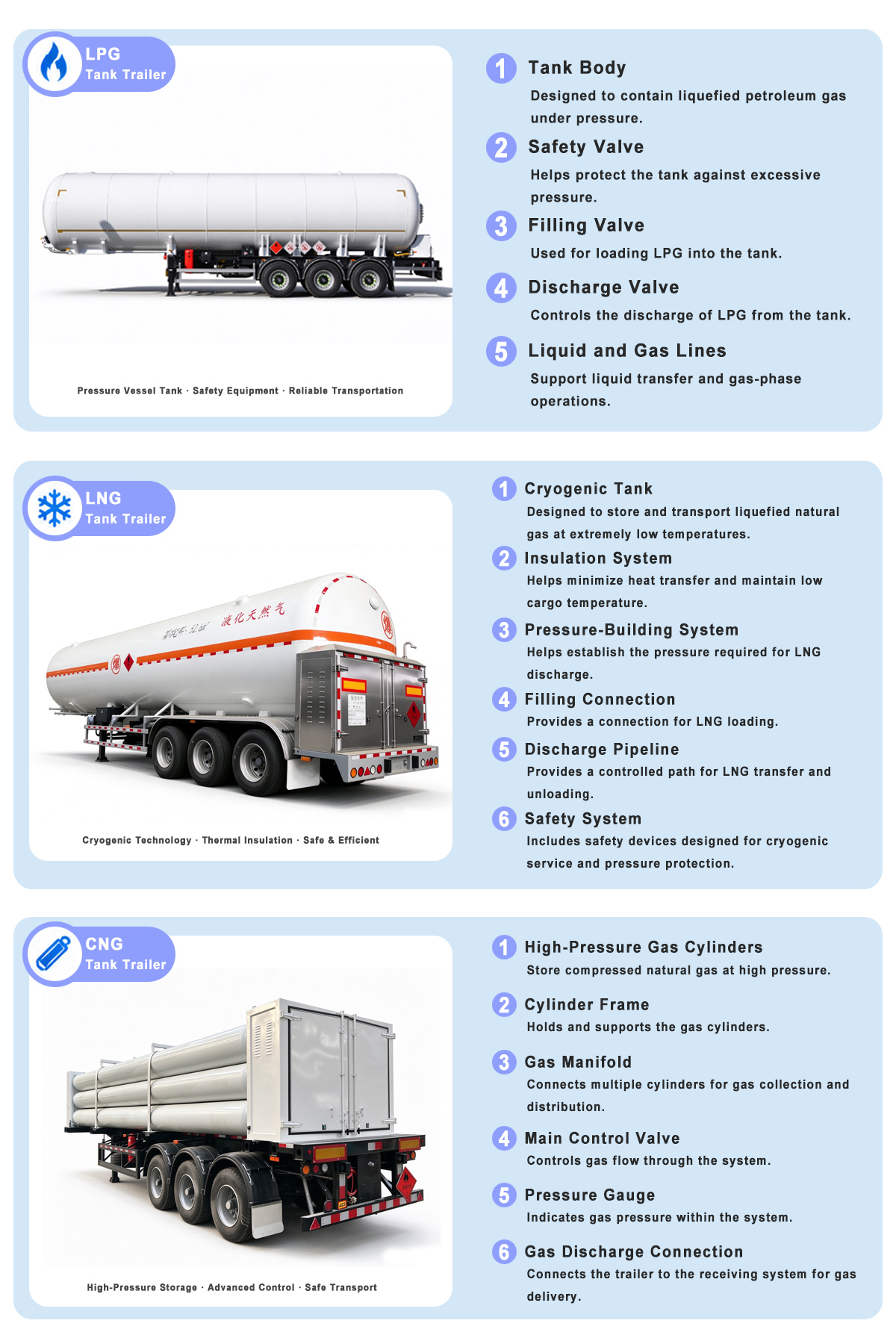
Different gas, different solutions. FUYUE provides professional gas tank trailers for LPG, LNG and CNG, with reliable structure, safe operation and efficient transportation.
LNG Tank Trailer Specifications
Advanced Configurations for Cryogenic Gas Transportation
Specification | Main material | Dimensions | Filling medium |
20 Feet (ICC) | Carbon steel tank Q345D frame | Shape: 6058*2438*2591 Weight: 3700kg | acetone, butanol, ethanol, gasoline and diesel, toluene, sodium hydroxide solution, monomer styrene, ammonia, benzene, butyl acetate, carbon disulfide, dimethu;amine water, ethylacetate, isobutanol, isopropanol, kerosene, methanol, crude oil, xylene, acetone cyanide, glacial acetic acid, acetic acid solution, anhydrous chloraldehyde, stabilized, formaldehyde solution, isobutanol, phosphorus trichloride, hydrated sulfide sodium, aqueous hydrogen peroxide, nitric acid, except for red smoke, stabilized, amine water |
Stainless steel tank (6mm thickness) Q345D frame | Shape: 6058*2438*2591 Weight: 4500kg | ||
Stainless steel tank (5mm thickness) Q345D frame | Shape: 6058*2438*2591 Weight: 3700kg | ||
30 Feet (IBB) | Stainless steel tank (5mm thickness) Q345D frame | Shape: 9125*2438*2591 Weight: 5068kg | |
Carbon steel tank (5mm thickness) Q345D frame | Shape: 9125*2438*2591 Weight: 5060kg | ||
40 Feet (IAA) | Stainless steel tank (4mm thickness) Q345D frame | Shape: 12192*2438*2591 Weight: 6100kg | |
Carbon steel tank (5mm thickness) Q345D frame | Shape: 12192*2438*2591 Weight: 6700kg |
Applications
Designed for Different Gas Transportation Needs
LPG Transportation & Distribution
LPG tank trailers are used to transport liquefied petroleum gas, mainly propane and butane, from filling facilities and storage terminals to gas distribution centers, industrial users and commercial supply points.
LNG Transportation & Energy Supply
LNG tank trailers are designed to transport liquefied natural gas at extremely low temperatures. They support delivery from LNG terminals and storage facilities to satellite stations, gasification facilities and industrial energy users.
CNG Transportation & Gas Supply
CNG trailers use high-pressure gas cylinders to transport compressed natural gas to receiving stations and facilities that may not be connected to a natural gas pipeline. They can support local gas distribution and industrial gas supply.
Gas Tank Trailer FAQ
Find Answers About LPG, LNG, CNG, Specifications and Safe Transportation
What is a gas tank trailer used for?
Gas tank trailers are designed to transport gaseous fuels such as LPG, LNG and CNG. They support fuel distribution, energy supply and industrial gas transportation. The trailer type depends on the gas being transported and its storage requirements.
What is the difference between LPG, LNG and CNG trailers?
LPG trailers transport liquefied petroleum gas in pressure-rated tanks. LNG trailers use cryogenic insulated tanks to maintain natural gas at extremely low temperatures. CNG trailers use high-pressure cylinders to store compressed natural gas. Each type requires a different storage system and equipment configuration.
What types of gas tank trailers does FUYUE offer?
FUYUE’s Gas Tank Trailer range covers LPG, LNG and CNG transportation applications. The appropriate trailer type depends on the gas, operating conditions, transportation requirements and destination-market regulations.
What is an LPG tank trailer used for?
An LPG tank trailer is used to transport liquefied petroleum gas, mainly propane and butane, between filling plants, storage terminals, distribution depots and commercial or industrial users.
What is an LNG tank trailer used for?
An LNG tank trailer transports liquefied natural gas at cryogenic temperatures. It is commonly used to deliver LNG from terminals or storage facilities to satellite stations, gasification facilities and industrial energy users.
What is a CNG trailer used for?
A CNG trailer transports compressed natural gas in high-pressure cylinders. It can deliver gas to CNG stations, industrial facilities and locations without direct access to a natural gas pipeline, depending on the receiving system and local requirements.
What should I consider when choosing an LPG, LNG or CNG trailer?
Consider the type of gas, required payload or capacity, transportation distance, loading and unloading method, operating pressure or temperature requirements, local regulations and receiving-facility compatibility. These factors help determine the appropriate tank or cylinder system and supporting equipment.
What safety systems are required for gas tank trailers?
Safety equipment depends on the gas type and trailer design. It may include pressure-relief devices, control valves, pressure or temperature instruments, emergency shut-off systems and suitable piping connections. The final configuration must meet applicable technical standards and destination-market regulations.
Can gas tank trailers be configured for different markets?
Yes. Relevant specifications and equipment can vary according to the gas type, operating requirements, applicable standards and destination market. Buyers should confirm local certification, inspection and operating requirements before placing an order.
What information is needed to request a gas tank trailer quotation?
Please provide the gas type (LPG, LNG or CNG), required capacity, intended application, destination country, preferred configuration and any applicable technical or certification requirements. This information helps the FUYUE team evaluate a suitable trailer configuration for your operation.
Explore More Trailer Types
Explore other FUYUE semi trailers designed for different cargo and transportation requirements.
Flatbed Trailer
Flatbed Trailer
Fuel Tank Trailer
Fuel Tank Trailer
Low Bed Trailer
Low Bed Trailer
Bulk Cement Trailer
Bulk Cement Trailer
Cargo Trailer
Cargo Trailer
Dump Trailer
Dump Trailer
Your Requirements. Our Manufacturing.
Every market and transportation application is different. That’s why we offer customized trailer configurations based on your cargo, payload, dimensions, road conditions and local requirements.
Whether you need a standard trailer or a specially configured solution, our team can work with you to determine the appropriate structure, axle configuration, suspension, braking system and other specifications.